Choosing safety features for an electric golf cart begins with evidence, not attractive accessories. The U.S. Consumer Product Safety Commission has repeatedly identified golf cart injuries involving collisions, passenger falls, and vehicle overturns. Its injury surveillance data also shows that children and unrestrained passengers face particular risks during sudden turns or stops. These findings make basic protection essential, especially on sloped paths, crowded resort roads, and uneven private property. A quiet motor can create danger because pedestrians may not hear the cart approaching.
So, what safety features are needed in electric golf carts? The answer depends on speed, terrain, passenger capacity, and intended use. ANSI/SAE Z130.1 provides industry guidance for golf car design, including braking, steering, stability, and occupant protection. NHTSA materials also distinguish conventional golf carts from low-speed vehicles, which may require additional equipment when used on public roads. Buyers should verify local requirements before choosing headlights, taillights, mirrors, seat belts, turn signals, reverse alarms, and windshield protection.
Visibility matters most.
A reliable cart should also include a dependable parking brake, speed control, automatic battery charging protection, and tires suited to the surface. In practical inspections, loose terminals, worn tread, weak brakes, and damaged seat belts deserve immediate attention. A polished body can hide serious problems. That is an easy mistake.
No single feature prevents every injury. A seat belt may reduce ejection risk, but poor driving habits still matter. Buyers should compare manufacturer test information, maintenance records, and independent safety guidance. The safest choice is not always the most expensive model; it is the cart whose features match real operating conditions.
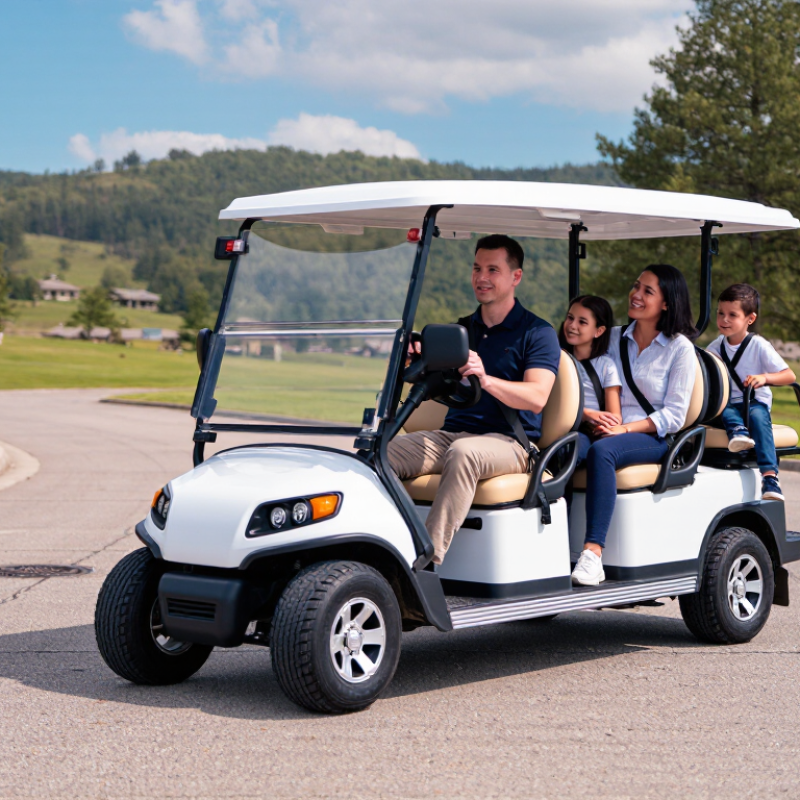
Identify the Main Safety Risks of an Electric Golf Cart
An electric golf cart can feel harmless because it moves quietly and usually travels at modest speeds. That impression can hide real hazards. Uneven ground, sharp turns, and sudden steering can make a cart unstable, especially when passengers sit high or cargo shifts. Wet grass and loose gravel also reduce tire grip. A quiet motor may surprise pedestrians who do not hear the cart approaching.
Braking and visibility deserve close attention. Worn tires, weak brakes, or an overloaded rear seat can increase stopping distance on a slope. Check how the cart responds before carrying passengers, and look for cracks, loose cables, or warning lights during routine inspections. Small signs matter. Limited lighting can make the cart hard to see near dusk, while glare or blind corners can conceal people and obstacles. Battery connections and charging equipment also need inspection; damaged insulation or unusual heat should not be ignored. Risk changes with the route, load, and weather, so one quick check may not catch everything. It is easy to overlook a familiar path. A more deliberate walk-around can reveal hazards before the cart moves.
Check Braking, Steering, and Stability Systems
When choosing safety features for an electric golf cart, inspect the brakes under realistic conditions. A firm pedal should respond predictably, without pulling the cart to one side. Test it on level pavement, then on a gentle slope if the owner’s manual permits. Listen for grinding and notice any unusual pedal travel. Small warning signs matter. Ask how often brake components need inspection, and check whether replacement parts are readily available. A short test drive cannot reveal every problem, though; worn parts may behave differently after repeated use.
Steering should feel controlled, not loose or unusually heavy. Turn slowly in a clear area and watch for delayed response, clunks, or excessive play in the wheel. Stability depends on more than a wide-looking stance. Consider the cart’s load capacity, tire condition, suspension, and how weight is distributed between passengers and cargo. On a turn, reduce speed and notice whether the body leans sharply. Avoid testing limits with people aboard. That may sound cautious, but a parking-lot check is not a substitute for a qualified inspection. Record concerns and ask a technician to assess them before regular use.
Evaluate Battery, Charging, and Electrical Protection Features
Choosing safety features for an electric golf cart starts with its battery system. During inspections, I look for secure mounting, protected terminals, and cables without cracks or swelling. Lead-acid batteries need ventilation and clean connections. Lithium packs need a dependable battery management system, temperature monitoring, and protection against overcharging or deep discharge. A loose battery can shift on a sharp turn. That small movement can damage wiring.
Charging safety deserves equal attention. Use a charger matched to the battery voltage, chemistry, and capacity. It should stop charging automatically and display a clear fault status. Select equipment with appropriate electrical safety certification. A cool, dry charging area matters; avoid blocked vents, standing water, and extension cords that feel warm. Check the plug, socket, and cable before every charging cycle. I prefer protection against overcurrent, short circuits, and reverse polarity. Simple checks work.
Electrical protection should include correctly rated fuses or circuit breakers near the battery, insulated terminals, and a reachable service disconnect. Look for sealed connectors where splash exposure is likely, especially near the floor and rear wheels. Test lights, warning indicators, and the charging interlock, not just the motor. A practical mistake is trusting a new-looking cart without opening the battery compartment. Corrosion can hide beneath a clean cover. If a fuse repeatedly trips, replacing it with a larger one is unsafe; find the fault instead. Have a qualified technician verify unusual heat, odors, or damaged insulation.
Choose Visibility, Restraint, and Passenger Safety Equipment
Good visibility starts with clear information, not decoration. Choose bright front and rear lights for dawn, dusk, and shaded paths. Turn indicators and brake lights should be easy to recognize from a distance. Reflective materials can improve side visibility near crossings and parking areas. Keep windshields, mirrors, and lamps clean after dusty or wet rides. A dirty lens can weaken a strong light.
Restraint equipment should match the cart’s seating design and passenger needs. Lap belts help keep riders seated during sudden braking or uneven turns. Use secure handholds, non-slip flooring, and side guards where passengers enter or exit. Seats should support the back without allowing riders to slide sideways. Never overload the seating area. Crowded benches change the cart’s balance and make supervision harder. A quick pre-ride check can reveal loose buckles, cracked mounts, or missing fasteners. Test each belt by pulling it firmly. Small failures matter. Drivers should also explain where passengers place their hands and feet before moving. I used to focus mainly on lights and brakes, but passenger positioning caused more uncertainty during sharp turns. That assumption needed correction. Inspect equipment regularly, follow local safety requirements, and replace damaged parts promptly. Safety features work best when passengers understand them and drivers use them consistently.
How to Choose Safety Features for Electric Golf Carts? - Choose Visibility, Restraint, and Passenger Safety Equipment
| Safety area |
Feature |
What to look for |
Selection and use checks |
| Visibility |
Headlights and tail or stop lamps |
Lights should be visible, securely mounted, and appropriate for the routes and conditions where the cart will operate. |
Check operation before use, keep lenses clean, and confirm that the cart’s lighting meets applicable local rules. Do not assume a golf cart is approved for public-road use. |
| Visibility |
Turn signals and hazard warning lights |
Signals help communicate intended movement to pedestrians and other traffic; hazard lights can make a stopped cart easier to notice. |
Verify that each signal works and is easy to see from the front and rear. Requirements vary by location and vehicle classification. |
| Visibility |
Reflectors and conspicuous markings |
Reflective surfaces can improve visibility when illuminated by another vehicle’s lights, particularly in low-light conditions. |
Choose securely attached reflectors that remain unobstructed and clean. Reflectors supplement, rather than replace, required lamps. |
| Visibility |
Mirrors |
A rear-view mirror, and side mirrors where suitable, can help the driver check surrounding traffic and the cart’s sides. |
Confirm the driver can adjust and use the mirrors from the normal seating position. Mirrors do not eliminate blind spots; turn and look before moving or reversing. |
| Restraint |
Seat belts and compatible occupant protection |
Where fitted or required, belts should be in good condition and approved for the cart’s seating positions and occupant-protection system. |
Follow the cart manufacturer’s instructions and local requirements. Do not add aftermarket belts without confirming compatibility with the vehicle’s structure and safety system. |
| Passenger safety |
Designated seats and passenger capacity |
Passengers should have individual, purpose-designed seating. The cart should not carry more people than its stated seating capacity. |
Check the capacity label or owner’s manual. Never allow passengers to ride on a lap, stand on the cart, or sit in an area not designed as a seat. |
| Passenger safety |
Handholds and secure footrests |
Stable handholds and footrests can help passengers maintain a secure position while the cart is moving. |
Check that handholds are firmly attached and footrests are intact. Keep hands and feet inside the cart and remind passengers to remain seated. |
| Passenger safety |
Entry and exit access |
Clear, stable access can make it easier for passengers to get on and off without stepping onto moving parts or uneven surfaces. |
Park on a stable surface and apply the parking brake before passengers enter or exit. Keep steps and entry areas clear of loose items. |
| Overall fit |
Manufacturer guidance and local rules |
Equipment needs depend on the cart’s design, intended use, passenger capacity, and where it will be operated. |
Review the owner’s manual and applicable local regulations before choosing or modifying safety equipment. Inspect safety features regularly and repair defects before use. |
Match Safety Features to Your Terrain, Usage, and Local Rules
How to Choose Safety Features for Electric Golf Carts?
Terrain should guide every safety decision. Smooth private paths need reliable brakes, headlights, and a clear rear view. Steep hills demand stronger braking systems, parking brakes, and tires with firm traction. Uneven ground may require greater ground clearance and stable suspension. Wet grass changes the risk. Choose weather-resistant electrical parts and inspect connectors regularly.
Usage matters just as much. A cart carrying children, tools, or several passengers needs secure seating, handholds, and effective restraints where appropriate. Frequent night driving calls for bright headlights, brake lights, reflectors, and turn signals. A reverse alarm can help around garages or crowded paths. Mirrors also reduce blind spots, but they cannot replace careful observation. Keep speeds suitable for the surface and load.
Local rules can change the correct equipment. Check municipal requirements before using a cart near public roads, shared paths, or community entrances. Some areas require specific lighting, reflectors, seat belts, slow-moving-vehicle signs, or approved safety equipment. Requirements may differ between neighboring communities. Confirm details with the local transport office or property manager.
Do not choose features by appearance alone. Test braking on a gentle slope, inspect tire wear, and check whether passengers can enter safely. A complete checklist is useful, but it is not perfect. Real terrain, weather, and driver habits may expose weaknesses later. Sometimes a simpler cart, used carefully, is safer than an overloaded one with extra equipment.
How to Choose Safety Features for Electric Golf Carts?
Match safety features to your terrain, usage, and local rules.
The 1–5 scores are practical planning priorities: 5 means the feature deserves the closest attention for that environment. Public-road use generally requires additional equipment such as lighting, mirrors, seat belts, and turn signals, but exact requirements vary by jurisdiction. Confirm applicable local regulations before selecting or modifying a cart.
Conclusion
Choosing the right safety features for an electric golf cart begins with identifying the main risks in your environment, including collisions, rollovers, poor visibility, passenger falls, and electrical hazards. Ask what safety features are needed in electric golf carts based on how and where the vehicle will be used. Reliable brakes, responsive steering, stable suspension, suitable tires, and a strong frame are essential for controlled operation. Battery protection, secure wiring, safe charging equipment, and safeguards against overheating or short circuits also deserve careful attention.
Visibility and passenger protection are equally important. Headlights, brake lights, turn signals, reflectors, mirrors, seat belts, handholds, and secure seating can help reduce accidents and injuries. Finally, match the cart’s safety equipment to the terrain, weather, passenger capacity, travel speed, and local operating requirements. A thoughtful safety review ensures the electric golf cart is practical, stable, visible, and prepared for everyday use.

 GLHF Golf