Electric golf carts can be inexpensive to run, but neglect turns small faults into costly repairs. Learning how to reduce maintenance costs for electric golf carts starts with a simple habit: inspect the cart before each shift. Check tire pressure, battery connections, brake response, and charging cables. A loose terminal or underinflated tire is easy to miss. It can still drain time and money.
The U.S. Department of Energy’s Alternative Fuels Data Center explains that electric vehicles generally need less routine maintenance because they have fewer moving parts and no engine oil changes. Consumer Reports’ 2020 maintenance analysis estimated lifetime maintenance and repair costs at about three cents per mile for electric vehicles, compared with six cents for gasoline vehicles. That is a useful benchmark, not a golf-cart cost forecast. Cart models, batteries, terrain, and usage differ.
As Consumer Reports auto-testing director Jake Fisher has explained, electric vehicles typically need less scheduled maintenance because their drivetrains are simpler. For golf-cart fleets, the practical lesson is to prevent avoidable wear, not skip inspections. Keep battery tops clean and dry, follow the manufacturer’s charging guidance, and record water levels when applicable. Small details matter. A dusty connector, a charger left in a damp corner, or one cart repeatedly driven uphill can signal trouble. Still, maintenance schedules are not magic; real usage may expose gaps in the plan. Track service dates, faults, and battery performance. Those records help managers spot repeat problems before they become expensive downtime.
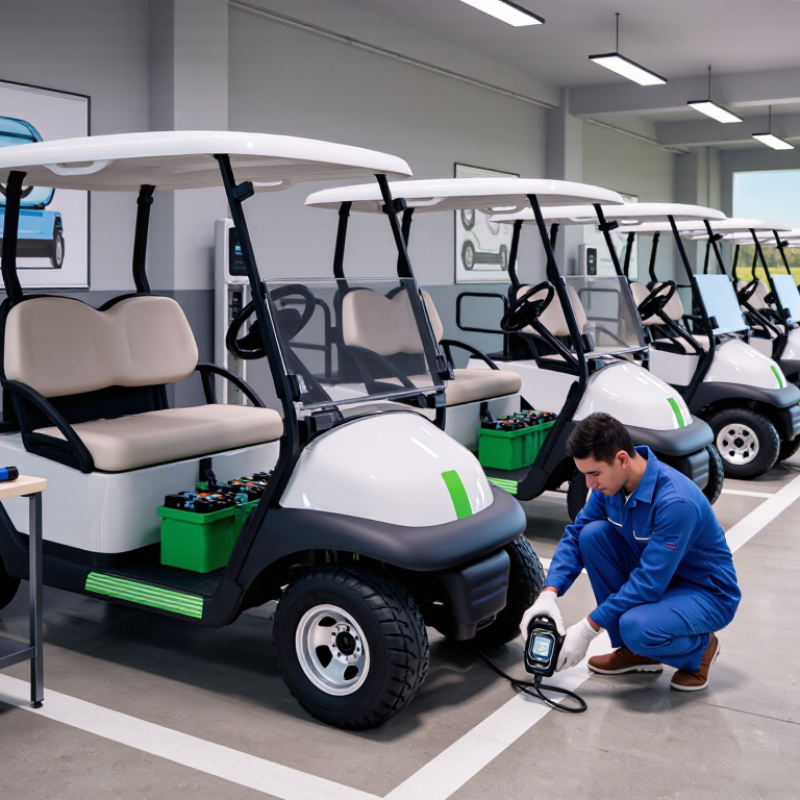
Lead-acid golf cart batteries often last 4–6 years, but treat that as a planning range, not a guarantee. Heat, deep discharges, and missed watering can shorten service life. A pack that struggles on familiar hills or loses range after a full charge may need testing. Check each battery’s voltage and specific gravity with suitable equipment; one weak unit can affect the whole cart. Replacement cost is only part of the bill. Labor, downtime, and proper recycling also matter.
Small habits help. Keep terminals clean, tighten connections, and use the charger recommended for the cart’s battery system. For serviceable batteries, check electrolyte levels regularly and add distilled water only as needed, following the maker’s instructions. Avoid storing the cart discharged. This sounds basic, but busy schedules make it easy to forget.
Tips: Record installation dates and monthly water checks. Ask a technician to test capacity before buying a full replacement set. Battery Council International’s national recycling-rate study reported that about 99% of U.S. lead batteries are recycled. That supports a clear end-of-life plan, though it does not erase replacement costs. Recycling access and fees vary, so confirm arrangements with a qualified local recycler.
Battery cycle life can change the long-term cost of an electric golf cart. Some lithium-ion packs are rated for 2,000 or more charge cycles, but that figure depends on cell chemistry, temperature, charging habits, and discharge depth. A cycle usually means using an amount of energy equal to one full charge, even if the battery is topped up in several shorter sessions. Check the manufacturer’s test conditions before comparing ratings. The number alone can mislead.
Lead-acid batteries often cost less upfront, yet they may need more frequent replacement and routine care, such as checking water levels in serviceable models. Lithium-ion systems generally need less day-to-day attention and can accept partial charging without the same maintenance routine. Still, they require a compatible charger and battery-management system. An incorrect setup can shorten service life or create avoidable downtime.
Consider a cart used for several short trips each day. Regularly charging it after each shift may be practical, while leaving any battery fully discharged in a hot storage area is not. Heat matters. So does workload. A hilly course, heavy cargo, or long daily routes can use cycles faster than light recreational driving. Track charging and service records for a few months; the pattern may reveal that a higher purchase price is worthwhile—or that your current usage does not justify it.
After a round of golf, recharge lead-acid batteries rather than leaving them partly discharged overnight. A golf cart may seem ready for another short trip, but repeated undercharging can contribute to sulfation and reduce usable capacity. Make charging part of the parking routine. Check the battery indicator, connect a compatible charger, and let its automatic cycle finish.
Small habits matter. Park in a dry, ventilated area, and keep flames or sparks away while batteries charge. For serviceable flooded batteries, inspect electrolyte levels according to the cart and battery instructions; add distilled water only when appropriate. Do not overfill. Sealed lead-acid batteries require different care, so identify the battery type before checking anything. If a battery feels unusually hot, smells strongly, or fails to charge normally, stop and have it inspected.
Consistency beats guesswork. A simple log of charging dates and unusual changes in driving range can reveal a weak battery before it disrupts a day’s use. I might still forget after a late round, which is exactly why a reminder near the parking area helps. Avoid routinely interrupting a charge cycle, and use the charger specified for the system. The extra minutes after each outing can help protect battery performance and reduce avoidable replacement costs.
How to Reduce Maintenance Costs for Electric Golf Carts
Correct tire pressure is a small maintenance task with a visible payoff. Underinflated tires flex more, wear unevenly, and can make the cart work harder. That extra resistance may reduce driving range over time. Overinflation can also cause a harsh ride and concentrate wear near the center of the tread.
Check pressure when tires are cool, using a reliable gauge. Read the recommended pressure in the cart’s manual or on its tire-information label; the maximum pressure printed on a tire is not necessarily the correct operating setting. Check all four tires, since slow leaks are easy to miss. I have found that checking only the front tires can leave a worn rear pair unnoticed. Pressure needs may also change with passenger or cargo loads, so follow the manufacturer’s guidance for your cart’s usual use.
Tips: Keep a small gauge in the cart shed. Check pressure monthly and before longer trips. Look for cuts, embedded debris, or uneven tread wear while you inspect. Adjust in small increments, then measure again. A gauge can be imperfect, and so can memory; write down readings if one tire keeps losing pressure.
A monthly inspection can catch small faults before they become costly repairs. Park the cart on level ground, switch it off, and secure it against rolling. Check brake pedals for unusual travel, sticking, or a soft, spongy feel. Look beneath the cart for fluid leaks or damaged parts. Then test the brakes slowly in a clear, level area. Stop if the cart pulls to one side or takes longer than usual to stop.
Inspect exposed cables for fraying, kinks, cracked insulation, and rubbing against sharp edges. Pay attention where cables pass through clamps or bend near moving parts. A cable can look clean and still be worn underneath. Small clues matter. Don’t guess at brake adjustments; use the service manual or ask a qualified technician when wear or damage appears.
With the key off, check accessible electrical connections for looseness, corrosion, or heat-darkened surfaces. Keep terminals dry, and avoid touching or tightening connections unless the manual explains how to do so safely. Take a quick photo of anything that looks different, and note recurring issues. Monthly checks are useful, but they are not a substitute for scheduled professional servicing. I might miss a hidden fault, too.
They often last four to six years. Treat that as a planning range, not a promise. Heat, deep discharges, and missed watering can shorten battery life.
The cart may struggle on familiar hills or lose range after charging. One weak battery can affect the whole pack. Have each unit checked.
Include parts, labor, downtime, and recycling arrangements. The purchase price is only part of the bill. Local recycling fees can vary.
Keep terminals clean and connections tight. Avoid storing the cart discharged. For serviceable batteries, check electrolyte levels and add distilled water only as needed.
Record installation dates and monthly water checks. Small reminders help. I still sometimes forget, so written notes are useful.
Follow the cart manual or tire-information label. The maximum pressure printed on a tire may not be the correct operating setting.
Check monthly and before longer trips, with tires cool. Measure all four tires using a reliable gauge. Slow leaks are easy to miss.
Check for cuts, embedded debris, and uneven tread wear. Underinflation can increase flex and rolling resistance. Overinflation may wear the tread center.
Understanding how to reduce maintenance costs for electric golf carts begins with identifying the parts that create the most recurring expense. Lead-acid batteries commonly last four to six years, while lithium-ion packs may provide more than 2,000 charge cycles, making battery type an important factor when comparing long-term costs. Whichever battery is installed, good charging habits can help preserve its service life: recharge lead-acid batteries after each use and follow the manufacturer’s guidance for routine care.
Preventing avoidable wear can also reduce repair bills. Check tire pressure regularly and keep it at the manufacturer’s specified level to limit uneven tire wear and unnecessary strain. Once a month, inspect the brakes, cables, and electrical connections for signs of wear, looseness, or damage. Addressing small issues early can help prevent larger repairs, extend the cart’s useful life, and keep ongoing maintenance expenses more predictable.

GLHF Golf