An electric golf cart may look simple, but its battery works under demanding conditions. Every hill, passenger, charging session, and storage period leaves a small mark. Understanding what affects battery lifespan in electric golf carts helps owners reduce avoidable wear and plan maintenance more intelligently.
Battery scientist Dr. Jeff Dahn has said, “The battery is the most important component in an electric vehicle.” His point applies strongly to golf carts. The battery controls driving range, acceleration, charging time, and long-term operating cost. However, battery life does not depend on one habit alone. Temperature, charging voltage, discharge depth, driving weight, speed, tire pressure, and storage conditions interact every day.
Small details matter.
A cart carrying four adults up a steep, wet course may draw far more current than expected. Repeatedly leaving a lead-acid battery partly discharged can cause sulfation. Excessive heat can accelerate chemical aging. Poor water levels may expose internal plates and create permanent damage. Lithium batteries have different needs, yet they still dislike extreme heat, deep depletion, and unsuitable chargers.
There is no perfect maintenance routine. Real owners forget sometimes. Weather changes, chargers age, and usage varies. That uncertainty deserves attention. The goal is not to promise a fixed battery lifespan. It is to identify the habits and conditions that quietly shorten it. This guide examines the top ten influences, using practical examples and evidence-based maintenance principles. It also separates common advice from claims that deserve closer examination.
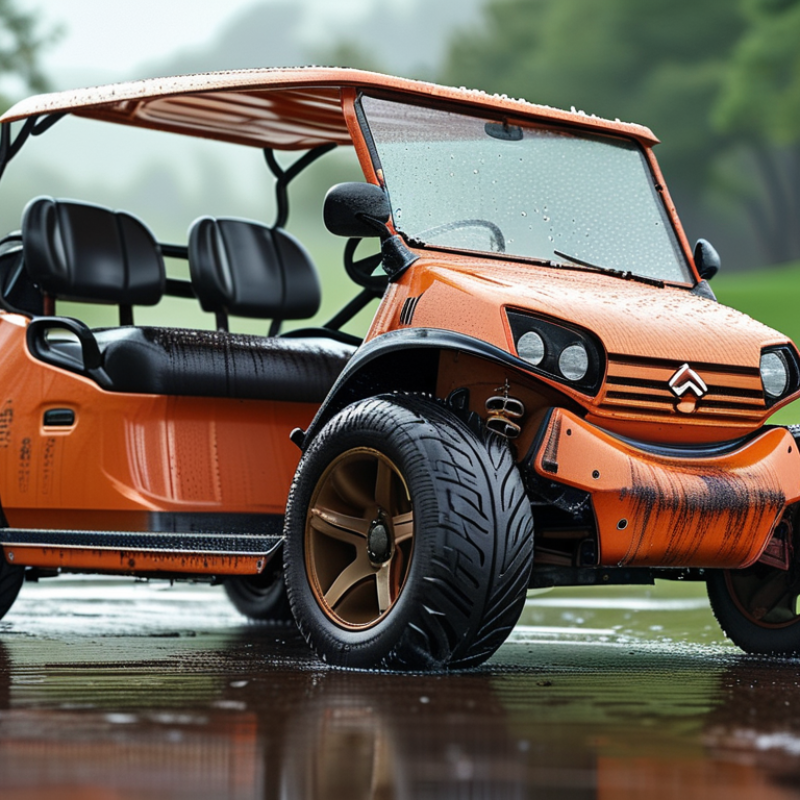
Top 10 Things Affecting Electric Golf Cart Battery Life
Battery type strongly influences daily performance and replacement intervals. Lead-acid batteries cost less initially, but they need regular watering and full charging. Lithium-ion batteries are lighter and usually tolerate deeper cycling better. However, their management system and charger must match the cart’s voltage. An incorrect charger can shorten battery life quickly. Check the label.
Capacity matters as much as battery chemistry. Amp-hours indicate how much energy the battery can store. A cart carrying two adults, tools, and groceries needs more capacity than a lightly loaded cart. Voltage must also match the motor and controller. Higher capacity cannot fix an unsuitable voltage system. In practical inspections, low capacity often appears as slower hill climbing, dimmer lights, and greater heat around the cables.
Power requirements change with terrain and driving habits. Steep grass, loose soil, frequent starts, and heavy loads demand more current. Tire pressure also matters. Underinflated tires make the motor work harder. Ten-minute trips may be damaging if repeated without proper recharging. Many owners leave batteries partly charged, then blame the battery after winter storage. That assumption is not always fair. Temperature, charging frequency, terminal corrosion, and water levels also affect service life. I have seen a healthy battery lose range because one connection was loose. Measure voltage, inspect terminals, and follow the manufacturer’s charging procedure. Small details matter.
| No. | Battery-Life Factor | Typical Technical Range or Effect | How It Affects Runtime and Service Life | Practical Recommendation |
|---|---|---|---|---|
| 1 | Battery chemistry and type | Flooded lead-acid batteries commonly provide about 500–800 full cycles; AGM batteries often provide about 500–800 cycles; lithium-ion batteries may provide approximately 2,000–5,000 cycles, depending on chemistry and operating conditions. | Battery chemistry determines usable capacity, charging efficiency, maintenance needs, weight, and the number of charge cycles before noticeable capacity loss. | Choose a battery type that matches the cart’s charger, controller, operating environment, and expected daily usage. |
| 2 | Battery capacity | Common golf-cart battery systems range from approximately 100 to 250 Ah at the system voltage, depending on the battery configuration and rating method. | Higher amp-hour capacity generally allows longer operation between charges, but actual runtime depends on load, speed, terrain, temperature, and the permitted depth of discharge. | Compare capacity at the same voltage and discharge rate; do not compare amp-hour figures from different test conditions without checking the specifications. |
| 3 | Cart voltage and power requirements | Many electric golf carts use 36 V or 48 V systems. A 5 kW motor at 48 V can draw about 104 A before controller, terrain, and efficiency effects are considered. | A motor, controller, or accessory load that exceeds the battery system’s design can increase current draw, heat, voltage sag, and battery wear. | Match battery voltage, continuous current capability, peak current capability, controller settings, and motor power requirements as a complete system. |
| 4 | Depth of discharge | Repeatedly discharging lead-acid batteries beyond roughly 80% of rated capacity can significantly shorten service life; many lithium systems use a battery-management reserve that limits full depletion. | Deeper discharge removes more active material from each cycle and typically reduces the total number of available cycles. | Recharge before the battery reaches a critically low state, and use the battery manufacturer’s recommended discharge limit. |
| 5 | Terrain, grade, and surface | Steep hills, grass, sand, mud, and rough surfaces can require substantially more torque than level, paved paths. Energy use may increase by 20%–100% or more in demanding conditions. | Higher rolling resistance and repeated climbs increase motor current, reduce driving range, and raise battery temperature. | Reduce speed on steep grades, avoid unnecessary acceleration, and select tires with suitable rolling resistance and traction. |
| 6 | Vehicle load and accessories | Passengers, cargo, lift kits, enclosures, heaters, lights, and audio equipment increase total mass or electrical demand. Each additional 100 kg can noticeably reduce range on hills or soft surfaces. | Greater weight requires more energy to accelerate and climb; accessories can also consume energy while the vehicle is stationary or moving slowly. | Keep the cart within its rated payload and switch off nonessential accessories when maximum range is required. |
| 7 | Driving style and speed | Frequent hard acceleration, high cruising speed, and abrupt braking increase current demand. Aerodynamic and rolling losses also rise as speed increases. | High current peaks produce greater voltage sag and heat, while aggressive driving reduces the distance available from each charge. | Accelerate smoothly, maintain a moderate speed, and avoid repeated stop-and-go operation when possible. |
| 8 | Temperature | Lead-acid battery capacity can fall noticeably below approximately 20°C and may be reduced by around 20%–30% near 0°C. High temperatures accelerate aging and water loss. | Cold conditions reduce available power temporarily, while sustained heat increases corrosion, chemical degradation, and the risk of thermal stress. | Store and charge batteries in a ventilated area within the recommended temperature range, and avoid charging a hot battery immediately after heavy use. |
| 9 | Charging method and charger compatibility | A complete charge may take about 6–10 hours for many lead-acid systems, while lithium systems can often charge in roughly 3–6 hours, depending on charger output and battery size. | Undercharging causes sulfation in lead-acid batteries; overcharging creates heat, water loss, and accelerated aging. An incompatible charger can damage the battery or battery-management system. | Use a charger specifically matched to the battery chemistry, voltage, capacity, and charging profile. |
| 10 | Maintenance, storage, and connections | Loose or corroded connections can create resistance and heat. Flooded lead-acid batteries typically require periodic electrolyte inspection, while lithium batteries generally require less routine maintenance. | Poor connections reduce power delivery and may cause uneven charging. Long periods of inactivity, especially in a partially discharged state, can permanently reduce capacity. | Keep terminals clean and tight, inspect cables regularly, follow the correct water-maintenance schedule, and store the battery at the recommended state of charge. |
Note: Runtime and cycle-life figures are typical ranges, not guarantees. Actual results vary with battery design, test conditions, vehicle configuration, terrain, temperature, charging practices, and maintenance.
: Lead-acid batteries cost less, but require watering and regular full charging. Lithium-ion batteries are lighter and often handle deeper cycling better. Results vary.
The battery, motor, controller, and charger need compatible voltage. An incorrect charger may cause overheating or incomplete charging. Check the battery label.
Two adults, tools, and groceries require more energy than one lightly loaded cart. Heavy loads increase starting torque and cable heat. Less cargo helps.
Steep grass, loose soil, gravel, and repeated starts demand more current. The motor may heat faster during frequent climbs. Flat routes use less energy.
Yes. Higher speeds create much more air resistance. Sudden acceleration also consumes extra energy. Steady speeds are usually kinder to the battery.
Charge after meaningful use instead of waiting until the cart barely moves. Avoid leaving it completely discharged overnight. A compatible smart charger is safer.
Check electrolyte levels in serviceable lead-acid batteries after charging. Use distilled water, and keep terminals tight and clean. Ventilation matters during charging.
Record charging time and travel distance for four weeks. Inspect tire pressure, cable connections, plug heat marks, and corrosion. Do not trust one voltage reading.
High heat can speed chemical aging, while cold temporarily reduces available capacity. Let a hot battery cool before charging. This is helpful, not guaranteed.
Store it charged, but avoid constant overcharging for long periods. Follow the battery’s charging instructions. My assumption may be wrong without testing the connections.
Electric golf cart battery life depends on several connected factors, beginning with battery type, capacity, and whether the battery can meet the cart’s power demands. Charging habits also matter: using the correct charger, avoiding incomplete or excessive charging, and keeping terminals clean can help maintain reliable performance. Regular inspections and proper maintenance may prevent small electrical problems from shortening battery life.
Driving conditions have a major effect as well. Steep terrain, heavy loads, rough surfaces, and high speeds require more energy and can increase battery wear. Temperature is another important influence, since extreme heat or cold can reduce efficiency and affect storage results. In addition, batteries naturally lose capacity with age, while frequent use increases the number of charge cycles. A healthy electrical system, suitable storage practices, and timely attention to wiring or connection issues are essential when considering what affects battery lifespan in electric golf carts.

 GLHF Golf