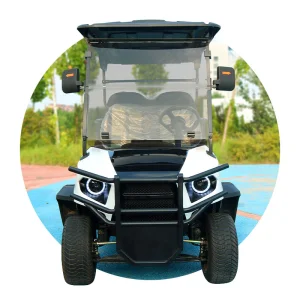
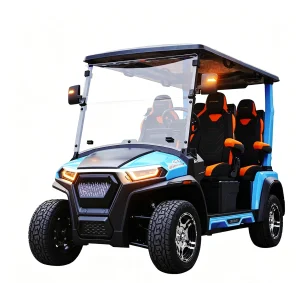
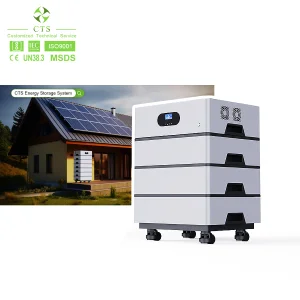
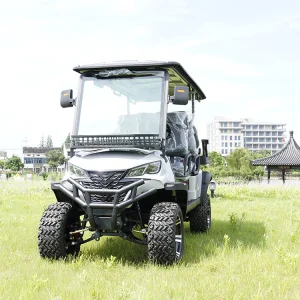
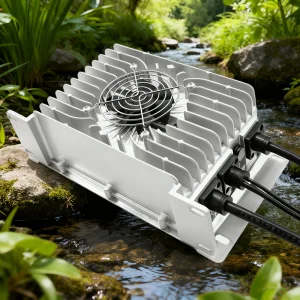
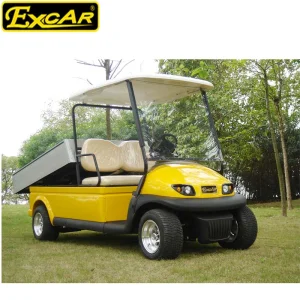
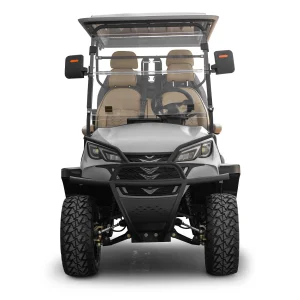
Explore customized low-speed vehicles, modular charging components, and mounting bracket assemblies engineered for institutional and commercial deployment.
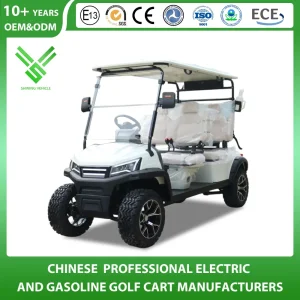
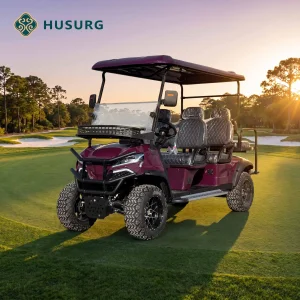
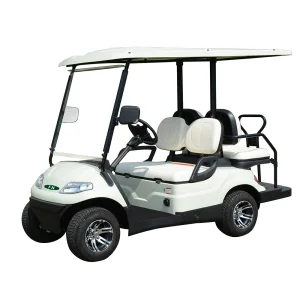
Analyzing the paradigm shift in low-speed vehicles (LSVs) as they integrate into industrial, hospitality, and commercial operations worldwide.
The global low-speed vehicle (LSV) market is undergoing a structural transformation. No longer confined to the pristine fairways of recreational golf courses, contemporary customized golf cart solutions have evolved into essential micro-mobility assets for industrial complexes, high-end hospitality venues, sprawling residential developments, and municipal utility operations. This migration from sport-specific accessory to critical commercial transport is driven by two main catalysts: global net-zero carbon mandates and the rapid decline in the Total Cost of Ownership (TCO) of lithium-ion drivetrains relative to combustion and traditional lead-acid configurations.
Modern enterprises demand bespoke engineering. Standard fleet vehicles struggle to adapt to the specialized challenges of extreme terrains, highly corrosive coastal resort environments, or the rigorous weight-bearing requirements of heavy-duty cargo transport. Consequently, industrial procurers look to customized manufacturers to integrate advanced technologies—such as active battery management systems (BMS), high-output alternating current (AC) motors, automotive-grade hydraulic disc brakes, and smart telematics. The transition towards high-performance systems ensures operational longevity, safety compliance, and maximum fleet uptime.
Enterprise procurement teams focus heavily on the metrics of reliability, long-term support, and custom adaptability. In high-density settings like international airports, municipal parks, and luxury resorts, utility fleets must operate continuously without unscheduled downtime. This creates a highly technical purchasing path: buyers are no longer looking at basic aesthetic customizations. Instead, they require structural parameters like corrosion-resistant hot-dip galvanized chassis, IP67-rated electrical components, heavy-duty utility cargo beds, and integrated solar charging systems. The selection of suppliers is based heavily on their engineering expertise, their capability to handle OEM/ODM requests, and their commitment to manufacturing quality standards.
Leveraging cutting-edge manufacturing processes, localized supply networks, and strict quality control at Ningbo GLHF Golf Co., Ltd.
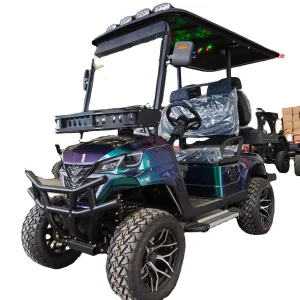
Ningbo GLHF Golf Co., Ltd. is a professional manufacturer specializing in electric golf carts and golf course mobility solutions. The company focuses on the design, development, and production of lithium and lead-acid battery-powered golf vehicles, providing reliable transportation solutions for golf courses, resorts, residential communities, hotels, and commercial facilities worldwide.
Since its establishment, GLHF Golf has built a strong foundation in electric mobility engineering and golf industry applications. In its early stage, the company concentrated on assembling basic lead-acid battery golf carts for domestic markets, gradually gaining experience in vehicle structure optimization and battery management systems. As demand for cleaner and more efficient energy solutions increased, the company entered a rapid development phase, introducing lithium battery technologies and upgrading its product line to meet international standards.
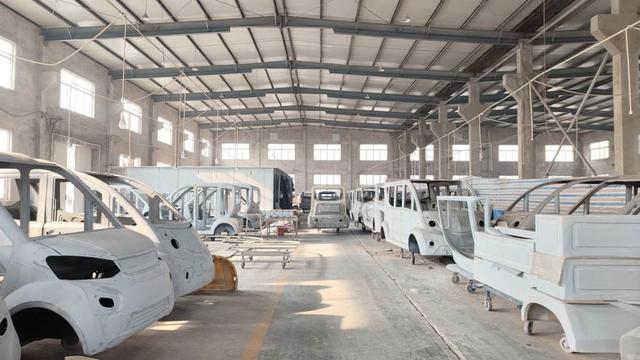
Over the years, GLHF Golf expanded its manufacturing capabilities with advanced production lines, precision assembly workshops, and strict quality control systems. The company continuously improved core technologies such as electric drivetrain efficiency, battery endurance, and vehicle safety performance. At the same time, it developed a diversified product portfolio covering passenger carts, utility carts, and customized fleet solutions for large-scale golf course operations.
Today, Ningbo GLHF Golf Co., Ltd. serves global clients with a strong commitment to innovation, durability, and energy efficiency. With ongoing investment in smart mobility systems and sustainable transportation technologies, the company aims to become a leading international supplier of electric golf cart solutions, delivering high-performance, eco-friendly vehicles for modern golf and leisure industries.
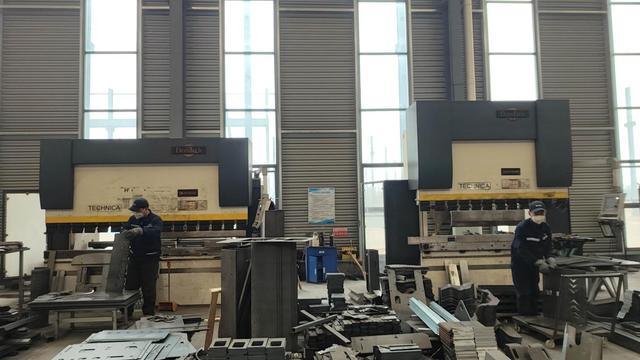
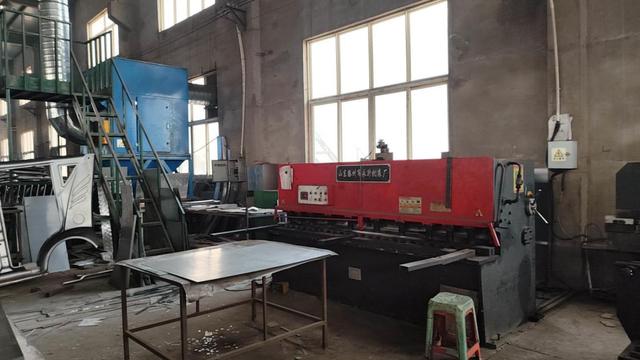
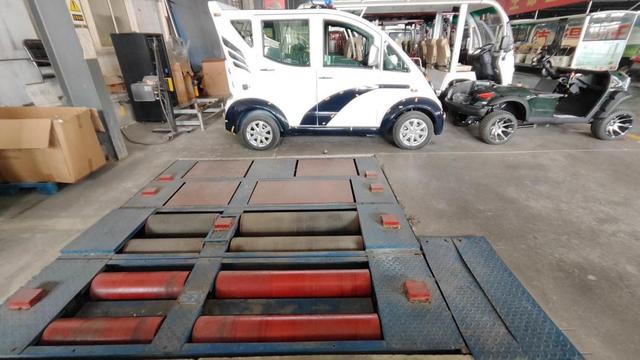
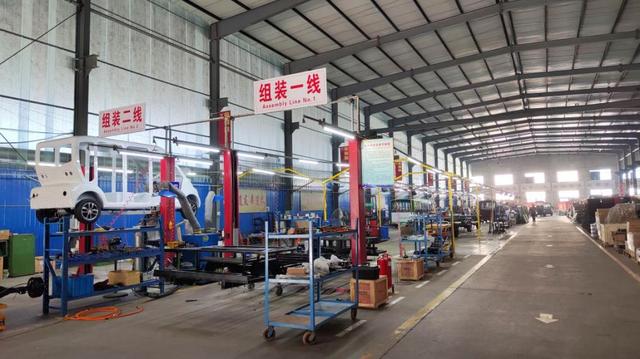
Operating from Ningbo, one of China's primary manufacturing and logistics hubs, GLHF Golf leverages a highly integrated industrial ecosystem. The local supply chain provides instant access to advanced metallurgical facilities, custom plastics molding plants, and state-of-the-art electronics manufacturers. This concentration allows the company to rapidly develop prototypes, optimize vehicle weights using advanced aluminum alloys, and maintain highly competitive production lead times compared to North American or European assembly operations. The factory uses computerized dynamometers, laser wheel-alignment machines, and simulated road test tracks to ensure every vehicle leaves the line in perfect working order.
A detailed engineering breakdown of customizable configurations available for industrial fleet buyers.
Understanding the technical specifications of customized low-speed vehicles is essential for selecting the correct model for your operation. Below is a detailed breakdown of current standard drivetrain configurations, suspension setups, and structural components available for custom fleet orders:
| Configuration Parameter | Standard Capability | Bespoke Customization Options | Industrial Application Focus |
|---|---|---|---|
| Drivetrain Motor | 48V 4kW AC Asynchronous | 72V 5kW / 7.5kW PMSM Motor | High-torque climbing, heavy passenger loads |
| Battery System | Lead-Acid (Deep Cycle) | LiFePO4 Lithium (100Ah to 200Ah + Smart BMS) | Extended range, maintenance-free, rapid charging |
| Chassis Structure | Welded High-Tensile Steel | Hot-Dip Galvanized or T6 Aluminum Alloy | Corrosion resistance in coastal resorts & salt air |
| Braking System | Mechanical Rear Drum | 4-Wheel Hydraulic Disc + Electromagnetic Brake | Safety on steep terrains, heavy downhill cargo transport |
| Suspension Setup | Leaf Springs with Dampers | Lifted Independent Double A-Arm Suspension | Off-road terrain, rugged terrain trail hunting |
| Telematics & Fleet Management | Analogue Speedometer | Smart LCD Touchscreen, GPS tracking, Geofencing | Rental fleets, resort management tracking |
When analyzing the cost of a customized vehicle fleet over its operational lifetime, the choice of battery chemistry is the primary cost driver. Standard lead-acid batteries have a low upfront purchase price but require regular distilled water top-offs and suffer from reduced capacity under deep discharge cycles. Typically, lead-acid systems must be replaced every 2 to 3 years. In contrast, customized Lithium Iron Phosphate (LiFePO4) systems require zero regular maintenance, charge in less than half the time, and retain over 80% capacity after 3,000 full charge cycles (often lasting 8-10 years). This longevity drastically reduces the long-term operational costs and replacement labor, resulting in significant savings for fleet managers.
How customized low-speed vehicles adapt to specific industrial, residential, and commercial environments.
Every commercial application presents a unique set of challenges. By matching customizable options with environmental conditions, fleet operators can improve efficiency and safety across their facilities:
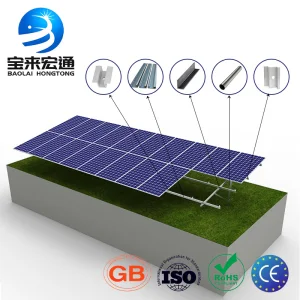
Additionally, modern green-energy integrations are creating new opportunities for off-grid operations. Specialized components, such as modular wind-resistant solar PV mounting systems, allow properties to set up dedicated charging stations in remote locations, utilizing solar power to charge vehicles without relying on the local electrical grid.
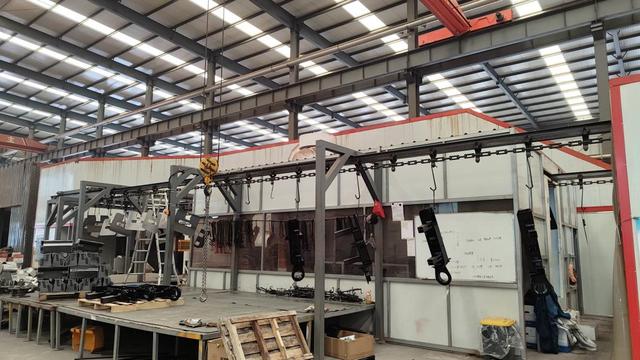
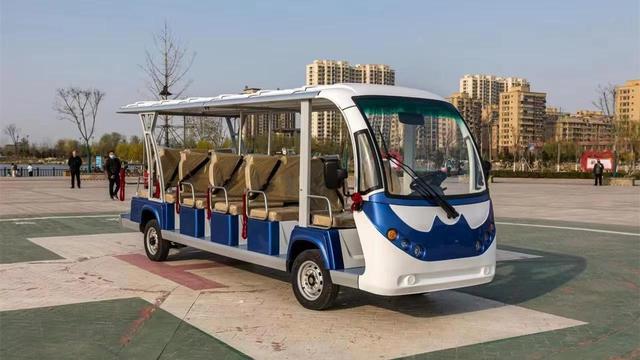
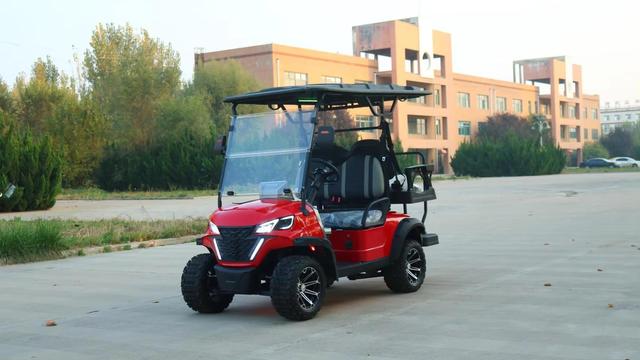
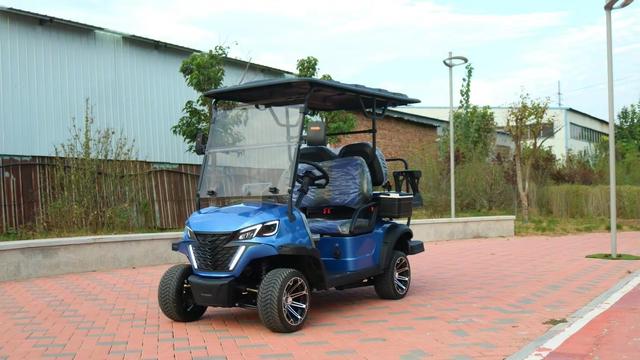
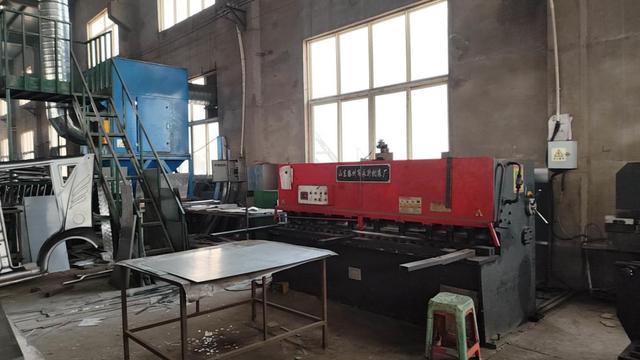
A visual look inside our manufacturing processes, showing structural fabrication, precision assembly, and safety testing.
Addressing essential technical, logistics, and compliance questions for global supply chain directors.
For import into the United States, customized golf carts intended for street operation must comply with the Department of Transportation (DOT) Federal Motor Vehicle Safety Standard 500 (FMVSS 500) for Low-Speed Vehicles (LSVs). This requires safety equipment such as a DOT-approved safety glass windshield, seatbelts, headlamps, turn signals, brake lights, mirrors, and a maximum speed cap of 25 mph (40 km/h). In Europe, vehicles require CE approval and EEC L7e road-use certification. Ningbo GLHF Golf Co., Ltd. designs and manufactures compliant chassis configurations to streamline import customs processes.
While lead-acid battery packs have a lower initial purchase price, they require frequent watering, add extra weight, and last for only 300 to 500 charging cycles. Lithium Iron Phosphate (LiFePO4) battery packs require no regular maintenance, reduce vehicle weight by up to 300 lbs, charge in half the time, and support over 3,000 charging cycles at 80% depth of discharge. Over a 5-year operational lifecycle, lithium batteries reduce replacement and maintenance labor costs, lowering the total cost of ownership by 35% to 45%.
Coastal and high-humidity environments accelerate corrosion on standard steel frames. For these locations, we recommend using a hot-dip galvanized steel chassis or a lightweight aluminum frame. Additionally, mechanical and electronic parts should have an IP67 rating, connectors must be sealed with dielectric grease, and structural hardware should be made of stainless steel. Standard body panels should receive UV-resistant electrophoretic paint coatings to prevent fading and cracking.
Yes. Commercial fleet controllers can be customized with Curtis or Inpower AC controllers that support telematics interfaces. This allows fleet managers to install GPS tracking systems, monitor battery levels in real-time, diagnose faults remotely, and set up geofencing boundaries. Geofencing is particularly useful for golf courses and resorts to prevent vehicles from entering restricted zones or exceeding set speed limits.
Standard lead times for customized fleet orders range from 30 to 45 days, depending on the level of customization. Minor modifications, such as color choices and logo additions, are completed on the shorter end of this window. Major engineering modifications, including custom cargo bed configurations, specialized suspension lifts, or integrated solar charging brackets, require additional prototype testing and quality control verification, extending the timeline to approximately 60 days. Shipping from the Ningbo port offers convenient access to major international shipping lanes.
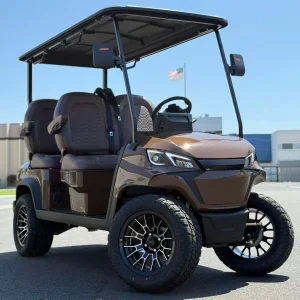
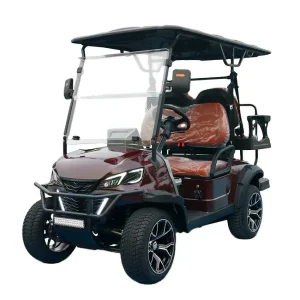
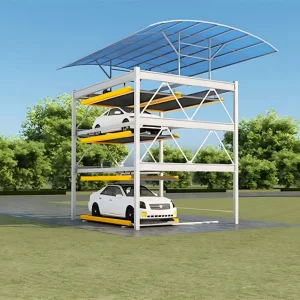
Explore high-speed passenger models, compact utility vehicles, agricultural battery chargers, and space-saving puzzle parking structures.
 GLHF Golf