Engineered for high performance, structural durability, and extended range across golf courses, resorts, and commercial hubs.
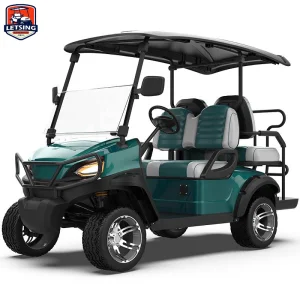
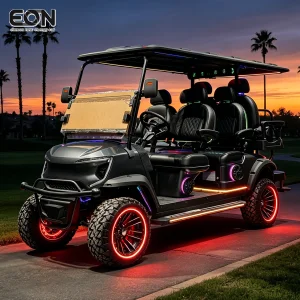
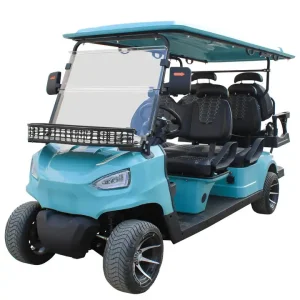
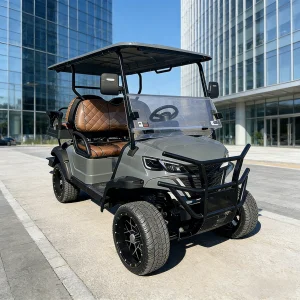
The global demand for commercial outdoor electric utility vehicles (UTVs) and low-speed vehicles (LSVs) is undergoing a major paradigm shift. Historically classified as simplistic fairway runabouts, modern golf carts have evolved into high-performance, street-legal vehicles engineered to navigate complex terrains, municipal streets, and luxury resort environments.
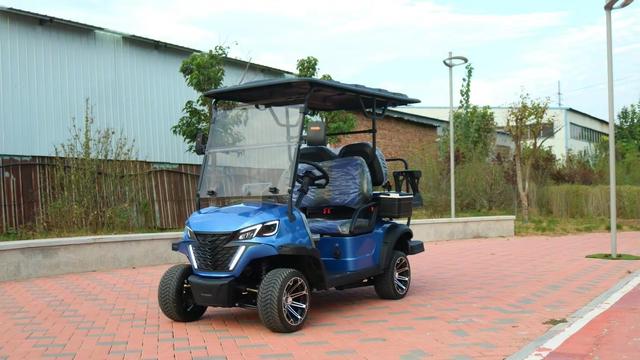
Ningbo GLHF Golf Co., Ltd. stands at the forefront of this industrial transformation. As a leading manufacturer specializing in electric golf carts and golf course mobility solutions, GLHF has systematically optimized vehicle architectures to accommodate advanced battery systems, efficient electric drivetrains, and smart telematics. From our early days of assembling lead-acid vehicles for domestic markets, we have expanded into a global powerhouse utilizing state-of-the-art lithium-ion technology to meet rigorous international standards.
Today, our product range covers utility platforms, hunting UTVs, luxury passenger transport, and large-scale commercial shuttle fleets. Through relentless mechanical innovation, we provide high-durability, energy-efficient vehicles tailored to the modern requirements of global enterprise buyers.
Leveraging high-torque AC brushless motors, intelligent BMS controllers, and heavy-duty chassis designs to maximize power transfer and operational lifespan.
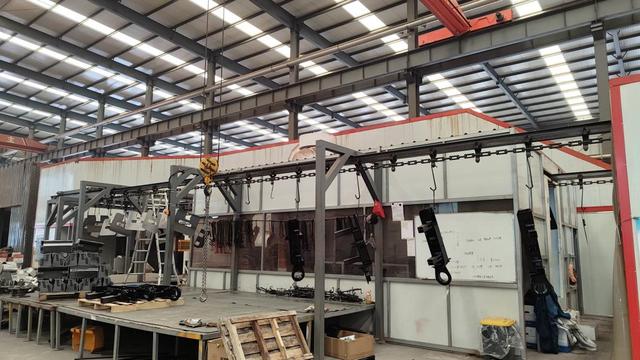
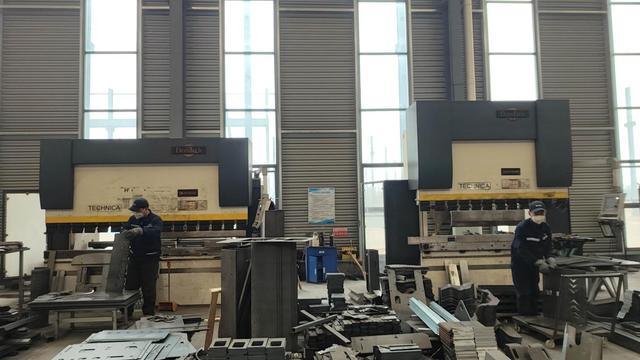
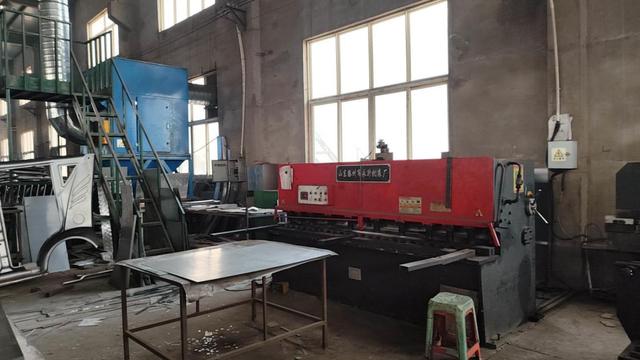
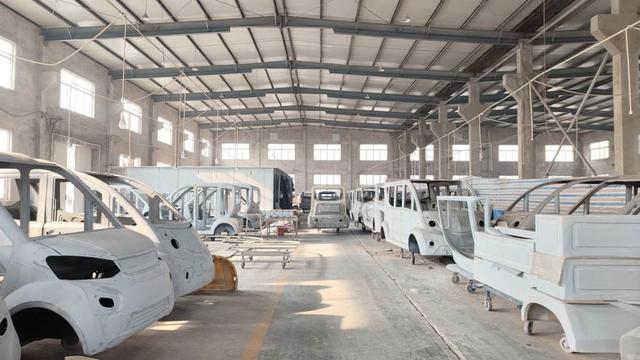
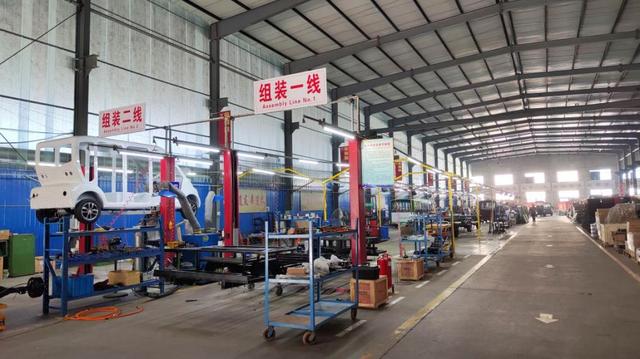
From frame fabrication and electrodeposition coating to precision assembly, our vertically integrated plant in Ningbo ensures unparalleled QC consistency.
Utilizing robotic welding rigs, automated guided vehicles (AGVs) for parts transit, and real-time electronic torque monitoring on the main assembly lines.
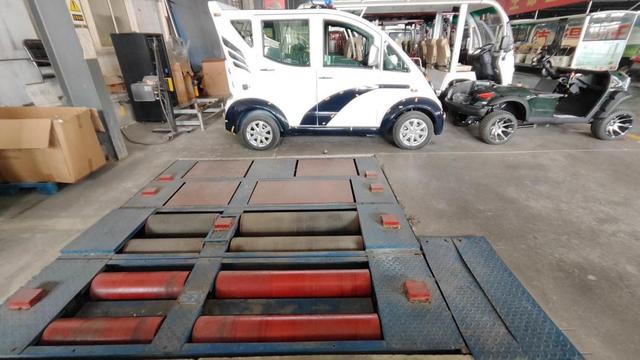
Every vehicle undergoes dynamometer calibration, suspension stress testing, climbing slope verification, and a high-pressure water deluge chamber cycle to guarantee IP67 ratings on all electronic compartments.
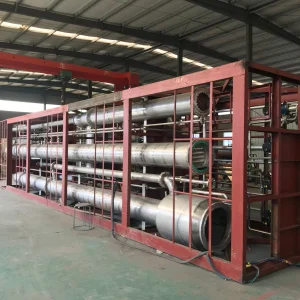
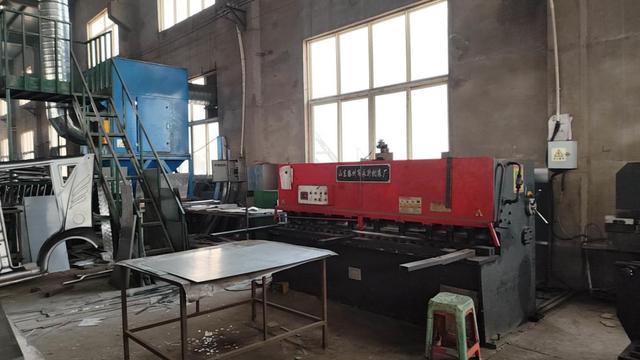
Procuring raw industrial equipment requires deep supply chain security. Ningbo GLHF Golf operates from a modernized industrial park featuring advanced welding bays, digital metal-laser cutters, and automated powder-coating lines. By maintaining critical components fabrication in-house (including structural frames, control wire harnesses, and suspension links), we limit dependency on external sub-contractors, safeguarding delivery timelines.
Our strategic proximity to the Port of Ningbo-Zhoushan—the world’s busiest port by cargo tonnage—allows for highly optimized logistics, offering significant ocean freight cost advantages and reducing transit lead times for our global distribution network. With Factory 4.0 practices, we track production batches digitally from raw steel inputs down to the final quality gate release, ensuring traceablity across every exported unit.
The convergence of automotive-grade drivetrains, advanced battery chemistries, and IoT fleet intelligence.
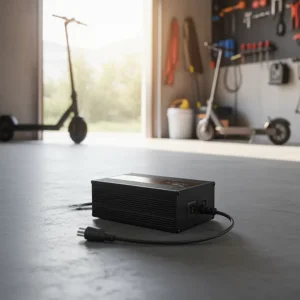
Transitioning from conventional Lead-Acid to high-density Lithium Iron Phosphate (LiFePO4/LFP) battery cells. LFP batteries offer more than 3,500 charging cycles, zero maintenance overheads, rapid charge rates, and significant overall weight savings, translating directly to improved turf preservation and extended operational range.
Moving from traditional DC systems to high-performance, maintenance-free AC Brushless Motors (3.5 kW to 7.5 kW rated options). These advanced powertrains feature regenerative braking technology, converting kinetic deceleration energy back into battery capacity, which improves hill-climbing torque and increases driving range by up to 15%.
Integrating telemetry modules directly with the CAN-bus architecture. Fleet operators can leverage GPS navigation, dynamic geofencing, remote lockouts, cellular diagnostics, and battery state-of-health (SOH) analytics. This centralizes management of resort and club cart fleets, optimizing operational uptime.
Heavy-duty, high-capacity, and multi-functional electric configurations tailored for utility, sightseeing, and off-road mobility.
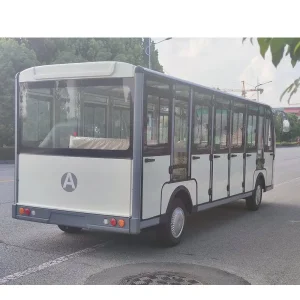
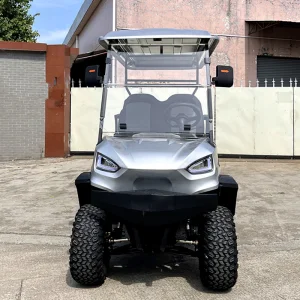
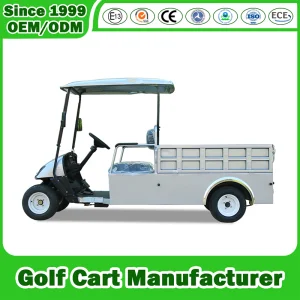
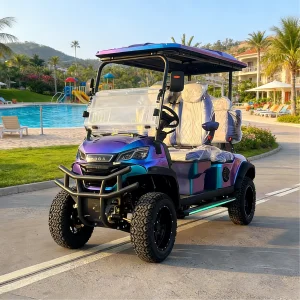
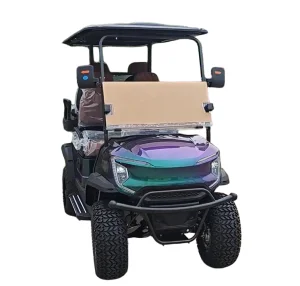
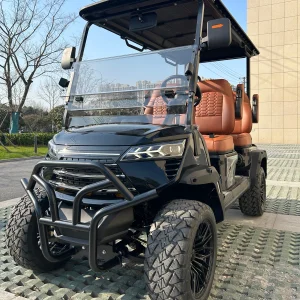
Providing optimized, reliable electric mobility frameworks for diverse industrial sectors globally.
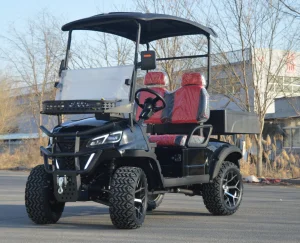
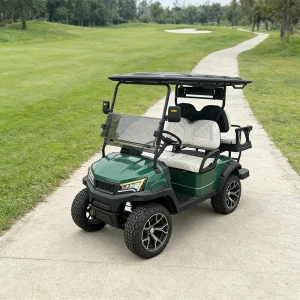
For high-end resorts and hotels, passenger comfort and silent operations are critical. Our luxury 4-seater and 6-seater fleets feature premium, custom-stitched ergonomic seating, double-wishbone independent front suspension systems, and whisper-quiet electric powertrains, delivering an elevated guest experience.
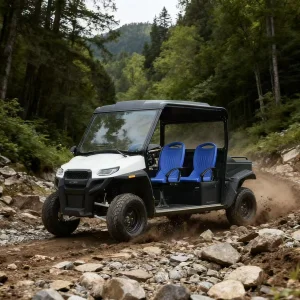
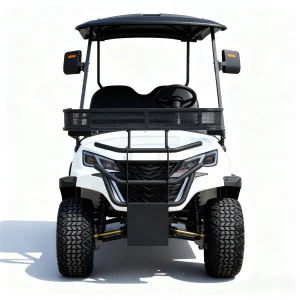
Built to handle harsh environments, steep inclines, and muddy trails. Outfitted with aggressive deep-tread tires, high-clearance lifted chassis, heavy-duty cargo boxes, and optional 4x4 drivetrain assemblies, our off-road and hunting utility models ensure reliability under demanding field conditions.
For industrial parks, campus security, closed airports, and municipal facilities requiring dependable last-mile transport. These robust designs feature heavy-duty cargo beds with drop-down sides, modular flatbed options, and high-efficiency fast-charging capabilities to minimize idle time.
Navigating global regulatory landscapes is critical for smooth custom clearance and regional street legalization. Ningbo GLHF ensures that exported vehicle models are fully aligned with international import laws. Depending on the target region, our vehicles feature appropriate homologation certifications:
DOT Certification (US Market): For Low-Speed Vehicles (LSVs) intended for public roads with speed limits under 35mph, our models conform to FMVSS 500 safety standards. This includes equipping vehicles with AS1-approved windshields, three-point safety belts, side mirrors, turn signals, high-intensity LED headlights, and backup alert systems.
EEC/CoC Certifications (European Market): To ensure roadworthiness across EU member states, our passenger vehicles meet the L7e category criteria. We provide complete Certificate of Conformity (CoC) documentation for local vehicle registration.
Local Distributor Support: Beyond compliance, we assist our overseas dealer network with comprehensive diagnostic software, detailed service manuals, exploded-view parts books, and rapid supply lines for warranty-related spare parts.
Mitigating supply chain volatility through transparent OEM/ODM customization and structured lifecycle economics.
While the initial acquisition cost of a lithium-powered vehicle exceeds that of lead-acid equivalents, LFP battery chemistries eliminate routine maintenance (distilled water top-ups) and decrease power consumption via higher charging efficiency. This yields an estimated 35-40% savings in operating expenses (OpEx) over a 5-year operational lifecycle.
From custom fleet color schemes and integrated branding to technical vehicle retrofits—such as mounting specialized utility cargo boxes, utility tool racks, ambulance stretchers, or specialized hotel luggage systems—our engineering team handles projects from conceptual CAD drafts to final physical prototyping.
Industrial sourcing directors look for more than just low unit costs; they prioritize supplier reliability, financial stability, and logistical capability. Ningbo GLHF minimizes risk for global B2B buyers through structured contract terms, transparent milestone tracking, and quality gates throughout production.
Our logistical frameworks support both Completely Knocked Down (CKD) and Semi-Knocked Down (SKD) shipping configurations. This flexibility allows distributors in high-tariff regions to assemble vehicles locally, reducing import duties and maximizing container utilization (packing up to 26 SKD units in a single 40ft HC container).
Answering key engineering, procurement, and regulatory compliance questions for professional buyers.
A: System voltage dictates overall efficiency, thermal generation, and torque output. A 72V system operates at a lower current draw compared to a 48V system while delivering identical power outputs (P = V * I). This reduction in current decreases thermal load on the controller and motor winding, extending component lifespan. Furthermore, 72V configurations offer superior hill-climbing acceleration and are recommended for multi-passenger shuttles and off-road utility vehicles carrying heavy payloads.
A: The BMS acts as the primary safety layer. It monitors individual cell voltages, pack temperatures, and current flows in real time. It protects the pack by preventing over-charging, over-discharging, short circuits, and thermal runaway. The system also performs active cell balancing to ensure uniform charge states across all cells, maximizing the battery pack's lifespan and overall safety profile.
A: Yes, provided the vehicles are ordered with specific Low-Speed Vehicle (LSV) compliance packages. In the United States, this requires compliance with FMVSS 500 regulations, which mandate key safety features such as headlamps, turn signals, mirrors, windshields, parking brakes, and 17-digit VIN identifiers. Buyers must request these configurations during the procurement phase to ensure hassle-free licensing and registration.
A: For large fleet orders, we recommend Semi-Knocked Down (SKD) packing. In an SKD setup, the top canopy, seat assemblies, wheels, and front suspension are packed alongside the main chassis. This method increases container capacity by up to 100% compared to shipping Completely Built Up (CBU) units. We supply step-by-step assembly videos and support tools to simplify final local assembly.
A: We offer a standard 2-year warranty on the vehicle frame, electric motor, and controller, and up to a 5-year warranty on our Lithium Iron Phosphate (LiFePO4) battery packs. We maintain an inventory of replacement parts at our central warehouse in Ningbo, enabling express dispatch of critical spares via DHL, FedEx, or air freight to minimize client downtime.
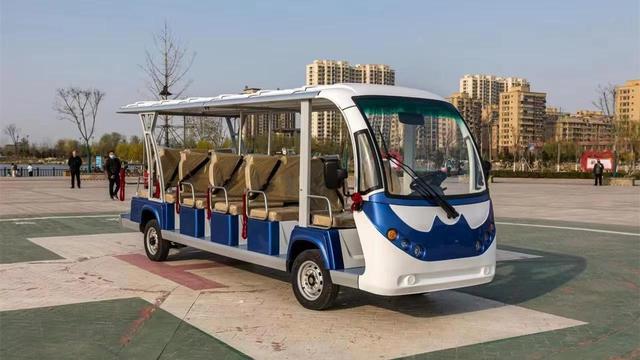
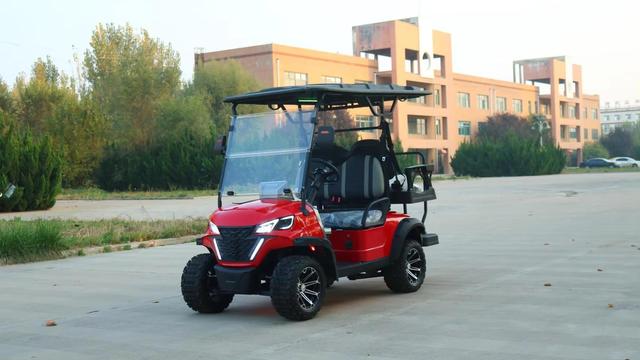
A look inside our advanced manufacturing facility, assembly workshops, and quality control systems in Ningbo.
 GLHF Golf